Skip to content
Live plants ship Mon–Friday

Acer palmatum 'Red Panda™' Japanese Maple

Sold out
Original price $150.00 - Original price $150.00
Original price
$150.00
$150.00 - $150.00
Current price $150.00
Size: 1 Gallon

Live Plant Guarantee

Every plant arrives healthy and properly packed. If yours doesn't, send a photo within 3 days of delivery and we'll replace it or issue a store credit.

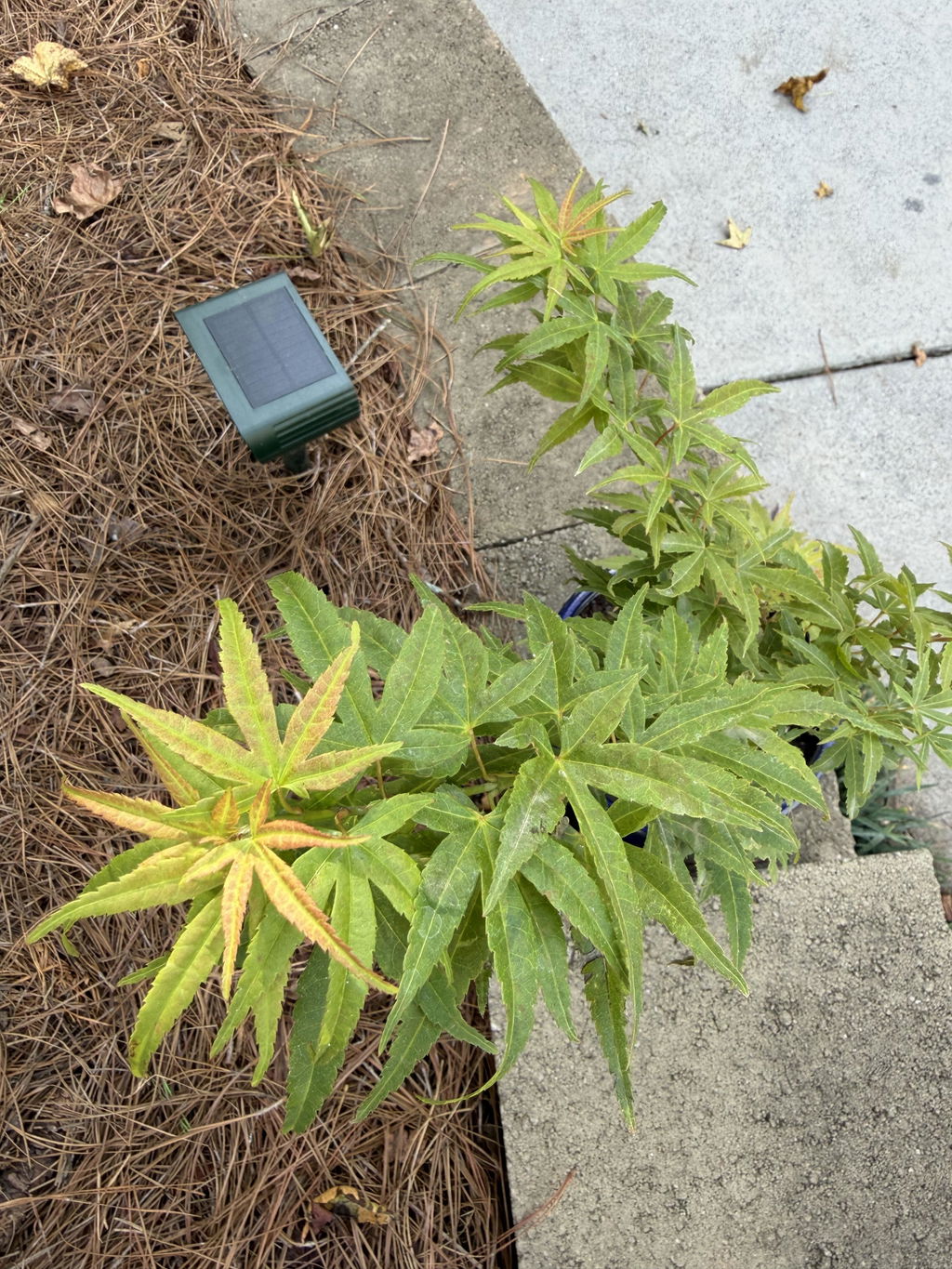
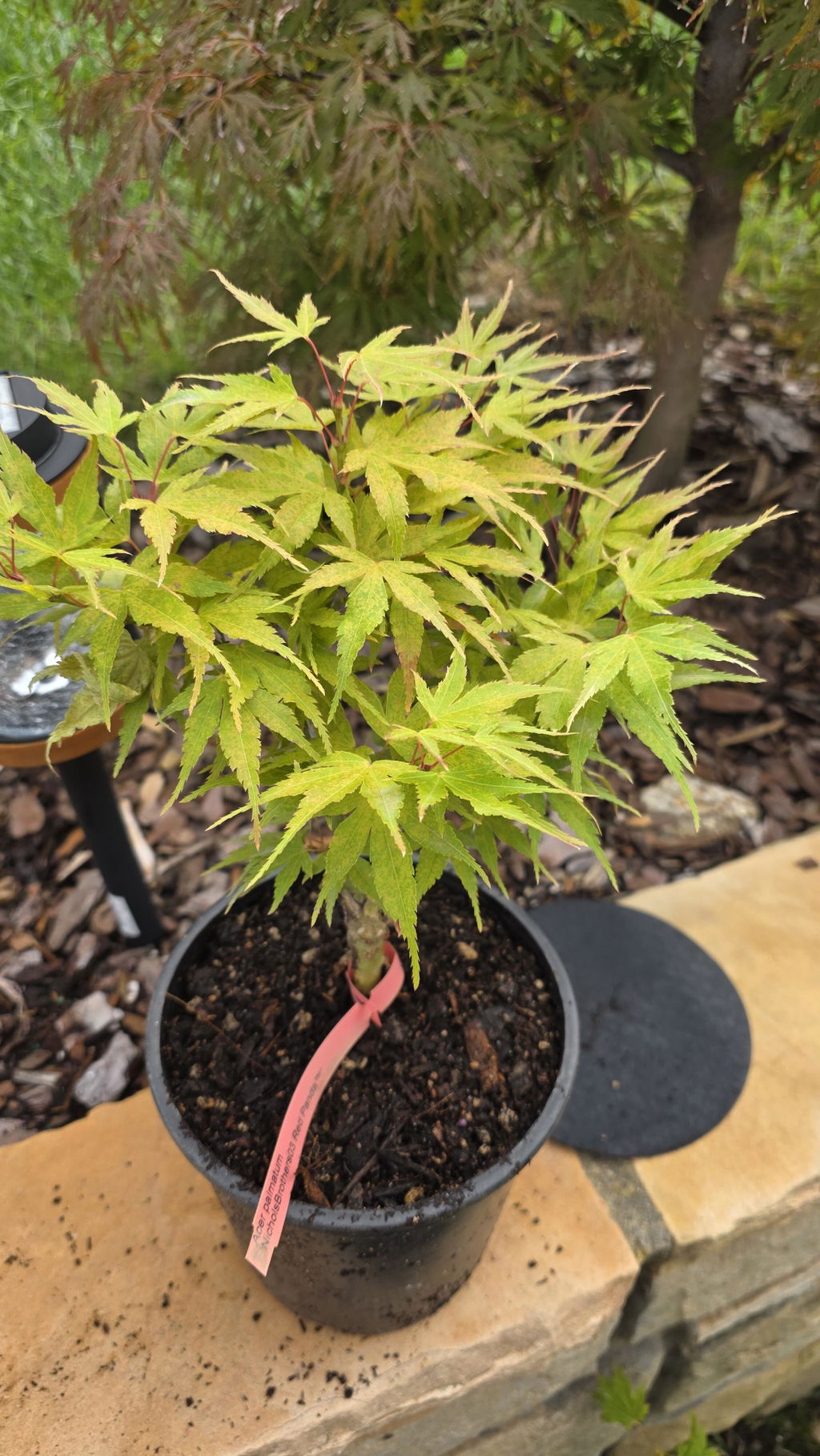
Acer palmatum ‘Red Panda™’ is a rare and highly collectible dwarf Japanese maple prized for its compact size, layered branching habit, and exceptional orange-red spring color. Part of the Mikawa Family Collection, ‘Red Panda™’ has the tight, layered growth habit reminiscent of ‘Mikawa yatsubusa’, but stands out with its brilliant orange-red spring foliage that holds its color well into late spring and early summer. Throughout summer, new growth continues to emerge in vibrant shades of orange-red, adding repeated bursts of seasonal color. In autumn, the foliage transforms into a brilliant fiery red. Its compact size makes ‘Red Panda™’ an excellent choice for smaller landscapes, Japanese gardens, containers, and collector gardens.

  • Growth Habit: Compact, dwarf, and tightly layered with a graceful branching structure
  • 10-Year Size: Approximately 3–4 feet tall and 3–4 feet wide
  • Growth Rate: Slow to moderate
  • Foliage: Layered, finely textured foliage emerging brilliant orange-red in spring and producing additional orange-red new growth throughout summer
  • Fall Color: Brilliant fiery red
  • Origin: Rare dwarf selection of Acer palmatum in the Mikawa Family Collection
  • Light: Morning sun to partial shade; afternoon shade is recommended in hotter climates to help protect the vibrant foliage
  • Soil: Moist, well-drained soil rich in organic matter
  • Hardiness: Zones 5–9
  • Best Uses: Japanese gardens, rock gardens, containers, small landscapes, specimen plantings, collector gardens, and woodland gardens
  • Best Feature: Exceptional orange-red spring color combined with a compact, layered Mikawa-type growth habit
  • Garden Interest: Provides multiple seasons of color, from brilliant orange-red spring foliage and colorful summer flushes to fiery red fall color
  • Why You'll Love It: A rare and distinctive dwarf Japanese maple that combines the highly desirable layered form of the Mikawa family with unusually long-lasting orange-red foliage, making it an outstanding choice for collectors and smaller landscapes.

Japanese Maple Care Guide

Your growing zone

Enter your ZIP code

Loading the hardiness map…

  • Suits this plant
  • Outside its range

The Japanese Maple is a highly valued ornamental tree known for delicate foliage and striking seasonal color. With proper placement and consistent care, these trees can flourish for decades and add a graceful focal point to your landscape.

General Japanese maple guidance

Most Japanese maples perform best in USDA Zones 5-8. Some cultivars are listed into Zone 9, but hot-summer success depends on cultivar, shade, soil moisture, humidity, and reflected heat.

Watering

Keep soil evenly moist during the growing season, from spring to early fall. Deeply water once or twice a week; increase frequency in hot, dry spells to prevent leaf scorch.

Tip: Mulch the root zone to conserve moisture and regulate temperature, keeping mulch away from the trunk.

  • Water, then allow soil to dry slightly before watering again. Use the finger test to check moisture.
  • Nursery potting mixes dry faster; containers may need more frequent checks.
  • Avoid persistent soggy conditions; Japanese maples dislike "wet feet."

Set your zone to show the watering rhythm for your climate.

Soil

Plant in well-draining, slightly acidic soil (pH 5.5-6.5). Amend heavy clay with compost and coarse material for drainage. Raised beds or slopes are useful where drainage is poor.

  • Dig a planting hole about 1.5 times the container width to loosen surrounding soil.
  • Set the root collar level with the surrounding grade; do not plant too deep.
  • Avoid over-amending; maples establish well in native sandy or clay soils when drainage is adequate.

Across zones, avoid wet feet. Japanese maples decline quickly in saturated soil.

Sunlight

Provide morning sun with afternoon shade in warmer regions. In cooler climates, trees tolerate more sun, but prolonged direct exposure can scorch foliage. Shelter from strong winds.

  • Most cultivars thrive with morning sun and afternoon shade; Zone 8 full sun is feasible for many upright types.
  • In Zone 9, protect from hot afternoon sun to reduce leaf scorch.
  • Container trees on patios and driveways may need extra shade due to reflected heat.

Set your zone for the safest exposure recommendation.

Fertilization

Feed in early spring with a slow-release, balanced formula (or organic alternative). Avoid heavy fertilization that can force soft growth and distort the tree's natural habit.

  • Use low-nitrogen products with N at 15 or lower only in early spring if needed; stop by June 1.
  • Fish emulsion is not recommended for Japanese maples.
  • Healthy, established trees often require no fertilizer when soil is suitable.

Use a slow-release, balanced or low-nitrogen fertilizer in early spring, then stop by early summer.

Pruning and maintenance

Prune lightly during dormancy (late winter) to remove dead or crossing branches and maintain the elegant form. Monitor for aphids or spider mites and treat with insecticidal soap if needed.

  • Never remove more than about 45% in a session; prioritize larger structural branches over twiggy growth.
  • Keep one central leader on upright forms; shape dwarfs and laceleafs to accentuate natural habit.
  • Sanitize pruning tools with rubbing alcohol to reduce disease spread.

Do structural pruning during dormancy and keep summer work limited to small corrections.

Winter and frost protection

In cold regions, wrap young trees with burlap or mulch heavily around the root zone to buffer freeze-thaw cycles.

  • Cover young plants during late frosts or spring cold snaps with cloth, not plastic.
  • After frost damage, apply a liquid fertilizer like Miracle-Gro every 2 to 3 weeks until new buds form.
  • As trees mature, frost impact lessens, but early protection still prevents leaf damage.

Zone-specific frost guidance appears after your USDA zone is set.

Container growing

Use well-draining potting mix in a container with drainage holes. Containers dry faster; check moisture frequently.

  • Ensure at least one drain hole; consider adding 1 to 2 inches of gravel for single-hole pots.
  • For automated irrigation, soils with more perlite drain quickly; otherwise add peat moss to retain moisture.
  • Repot or root-prune every few years: small pots about 3 years; large pots about 7 to 8 years.

Variety selection

Choose cultivars suited to your climate. 'Sango Kaku' shows coral bark interest; 'Bloodgood' is a classic, hardy option.

  • Match exposure to cultivar: most prefer morning sun/afternoon shade; many uprights tolerate full sun in Zone 8, but protect in Zone 9.
  • Dwarf forms are ideal for containers; uprights make strong landscape focal points.
  • Consider winter interest (coral bark types) and overall hardiness for your USDA zone.
Live Plant Guarantee

Healthy on arrival or we make it right

Shipped With Care

Live plants ship Mon–Fri by our expert growers

Talk to a Grower

Cultivar questions answered by experts

Collector-Grade Selection

Rare maples, conifers, and Buchholz introductions

  • 5 stars: 7 (100%)
  • 4 stars: 0 (0%)
  • 3 stars: 0 (0%)
  • 2 stars: 0 (0%)
  • 1 star: 0 (0%)
A
Alex DiMola

Red Panda is absolutely stunning! Arrived in perfect condition and has great size. Very happy with my order. Buchholz has amazing service.

J
Jacqueline Dial

I've been searching for this one for a while. I was very happy to be able to purchase it through Buchholz. It arrived in good condition and I'm excited to watch it grow and thrive!

D
Dave Conklin

We just love our little Panda! When it first arrived I was a little concerned in that it looked like most of our other standard Mikawas, but within a few days it showed out with it's true Red Panda colors. Just a wonderful little tree.

R
Ryan Duffy

A really good looking tree.

J
Jonathan Finley

Great condition on this rare plant.

A
Anonymous

Happy with the shipping of this beautiful cultivar! Came in perfect condition with some red color on the newer growth. Came to me as I expected. Perfect condition and the multiple branching that I love on a tree of this caliber! Thank you for such a great specimen!

S
Scott

Gorgeous little tree.